You step outside on a June morning and something looks off. Your maple, the one that’s been in the yard since before you moved in, has leaves that should be deep green by now. Instead they’re pale. Almost yellow. The veins are still green, but the leaf tissue between them looks washed out, like the color just drained away.
Your first thought is probably: does it need water? Maybe fertilizer?
Maybe. But probably not in the way you’re thinking.
What you’re likely looking at is iron chlorosis. It’s one of the most common tree health problems in Northern Utah, and it gets misdiagnosed constantly. Here’s what’s actually going on and why getting the diagnosis right matters a lot more than whatever treatment you’re tempted to buy at the garden center.
What Iron Chlorosis Actually Is
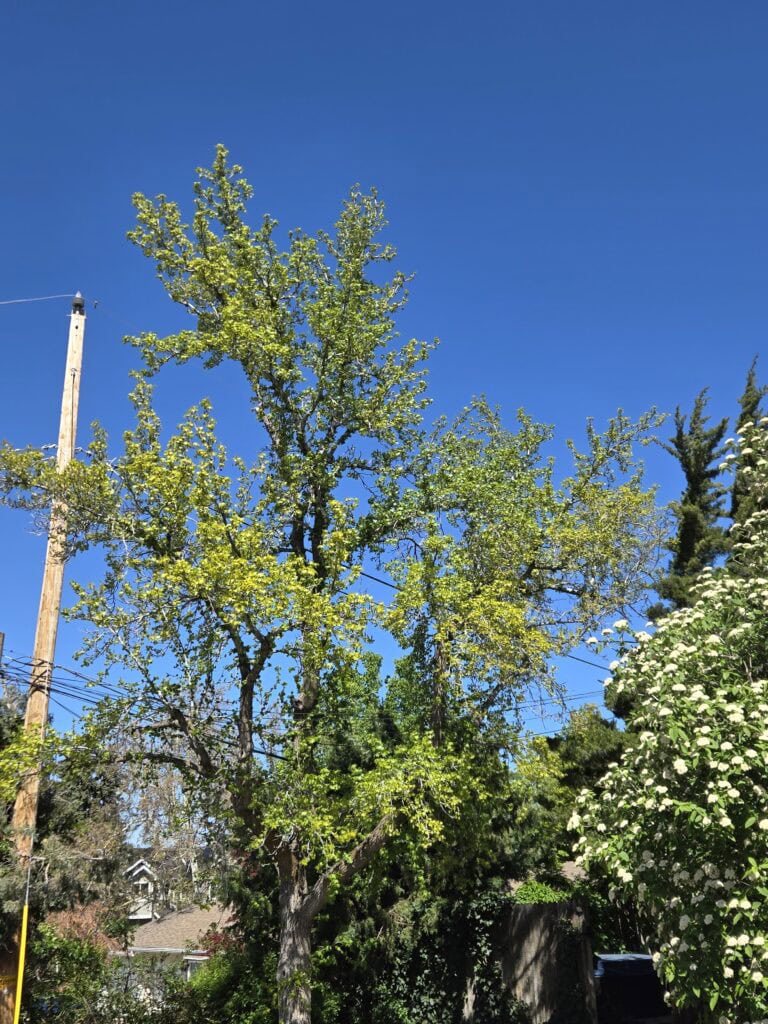
Chlorosis means the tree can’t produce enough chlorophyll. Chlorophyll is what makes leaves green, and more importantly, it’s how trees make energy. No chlorophyll means no food. A tree stuck in that situation isn’t going to turn things around on its own. It just keeps declining.
The telltale sign is what arborists call interveinal chlorosis. The veins of the leaf stay green while the tissue between them turns yellow, sometimes nearly white. It’s a distinct pattern. Once you know what to look for, you’ll start seeing it on trees all over the valley every spring.
Iron deficiency is a common culprit, but here’s the thing most people miss: the problem usually isn’t that there’s no iron in the soil. Utah soil typically has plenty of iron. The problem is that the tree can’t access it.
Why Utah Soil Makes This Worse
Our soil here is naturally alkaline. High pH locks iron into forms that tree roots simply can’t absorb. The iron is physically present but chemically unavailable. It’s like having money in an account you’re locked out of.
That’s why you can’t just spread iron fertilizer around the base of a tree and expect results. If the pH problem isn’t addressed, the iron you add will lock up just like the iron that was already there. You’ve spent money and the tree is no better off.
This is one of the reasons I get frustrated when homeowners come to us after they’ve already thrown a bunch of stuff at a sick tree and can’t figure out why it isn’t working. The tree isn’t failing to respond. The treatment was just aimed at the wrong thing.
But Iron Isn’t the Only Cause
This is where a lot of homeowners and honestly a lot of tree services get it wrong. Yellowing leaves that look like chlorosis can actually come from a handful of different places.
Compacted soil prevents roots from getting the oxygen and water they need, which shuts down the whole system. Girdling roots are roots that wrap around the base of the trunk and slowly strangle it. They can produce the same symptoms from the top down. Overwatering is genuinely common in Utah, where people set irrigation systems on summer schedules and forget to adjust them. Root rot, construction damage from the last five years, improper planting depth, lawn herbicide drift. All of these can produce yellow leaves that look like a nutrient deficiency but aren’t one.
Treating iron chlorosis when the real problem is compacted soil or a buried root collar isn’t going to help your tree. It’s going to waste your money while the actual problem gets worse.
What I Saw on a Recent Silver Maple
View this post on Instagram
I was out recently doing a macro infusion on a silver maple. When I pulled up to the property, the tree was a little yellow, not as green as it could be. And there were some branch tips out there that were really bad. So it was in need of iron.
I primed the system with water first, then got an iron and magnesium mixture slowly working its way into the tree. Come next spring, that’s going to be a nice deep green silver maple.
That job sounds simple on the surface. Tree needs iron, tree gets iron. But there’s a lot of diagnostic work that happens before I ever touch a tree. I confirmed it was actually an iron and magnesium deficiency. I ruled out root problems and soil compaction. I looked at the watering situation. And I chose a macro infusion specifically because it delivers nutrients directly into the vascular system, bypassing the soil pH problem entirely instead of fighting it.
That’s the difference between treating a symptom and actually solving the problem.
What a Real Diagnosis Looks Like
When we come out for a consultation, we’re not just looking at the leaves. We’re looking at the whole tree: the root collar, the soil, the surrounding grade, irrigation patterns, what’s been planted nearby, whether there’s been any construction within the last several years.
Yellow leaves are how the tree tells you something’s wrong. Our job is to figure out what that something actually is.
For iron chlorosis specifically, there are real treatment options. Deep root fertilization using chelated iron gets nutrients into the root zone in a form the tree can actually absorb. Macro infusions like the one I described work directly through the vascular system. Soil conditioning addresses the pH issue over time so the tree can eventually feed itself again. You can read more about how we approach it on our iron chlorosis treatment page and our deep root fertilization page.
But treatment is step two. Step one is knowing what you’re actually treating.
What to Do If Your Tree Has Yellow Leaves
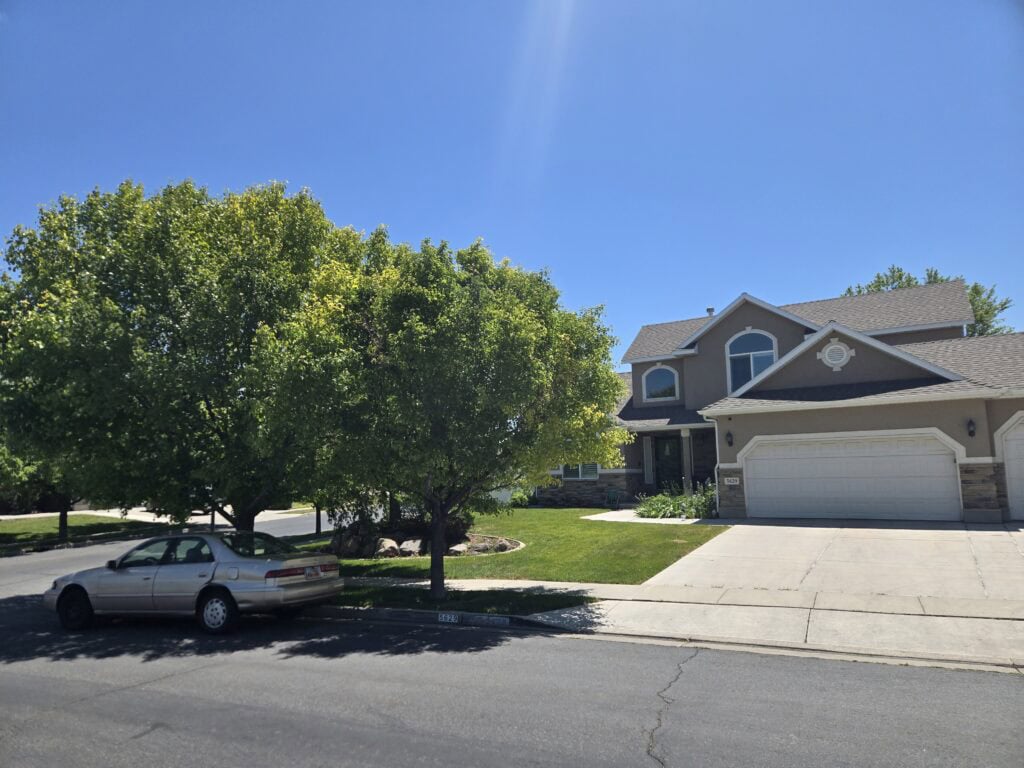
Don’t buy something off a shelf and hope for the best. Yellowing leaves in June or later in the summer, especially when the veins are still green, is your tree asking for help. It deserves an actual answer, not a guess.
If you’re in Weber County, Davis County, Morgan County, Ogden Valley, or anywhere else in Northern Utah, give us a call at 801-403-4496. We’ll set up a paid consultation to look at the whole picture, and tell you what we actually find, not just what it looks like from the outside.
That’s the only way to fix it.