
Last winter in Utah was the thinnest snowpacks anyone has measured. And your trees spent the summer living with the consequences! But most of them won’t show the effects of that until next spring.
It’s true we did have a welcome break with all the rain we had in September, but a wet month doesn’t undo a whole year’s worth of stress. In fact NOAA’s latest drought update for the Intermountain West says those late season storms brought some local relief, without erasing all the longer term water deficits we’re facing. Here are the two things we’re recommending to Northern Utah property owners before the first freeze.

What the numbers say
The NRCS Utah Water Availability Update was released on Oct. 1, and when you look back on the 2026 water year, it’s pretty sobering. Statewide snowpack peaked on March 9 with a record low of 8.4 inches of snow water equivalent. And then by April 1 it dropped to 2.7 inches (which is the lowest reading since they began taking measurements in the 1930s).
So what does all that mean? Well less snow in the mountains means less runoff. Reservoir storage across the state ended September at 45% of capacity, which is actually down from 59% the previous year. Here in the Weber and Ogden basins, reservoirs are at 35% capacity, and even the Great Salt Lake is only 1.2 feet above its own record low.
The Utah Division of Water Resources is tracking the trends and asking residents to rethink their fall irrigation plans, however trees need a different plan. Let’s talk about what that looks like.
Winter watering: the step most people skip
Your trees don’t just stop drinking when the leaves drop. Even evergreens keep losing moisture through their needles through the cold season, and their roots keep growing as long as the ground isn’t frozen. We know that when a dry tree goes into winter, it comes out of winter weaker.
“Most people think watering is just a summer job,” says Caleb O’Brien, ISA Certified Arborist and owner of TreeMendus Arbor Care. “But after a year like this one, what you do between now and March decides how your trees look in June. Enough to keep them alive, not so much that you drown them.”
Our general rule of thumb is give evergreens, and any tree that was planted in the last 5 years, a deep soak before the ground freezes. Then you can water once per month during dry spells right around midday when the temperature is above 40 degrees, and the soil isn’t frozen. A good way to do this is with a soaker hose laid inside the drip line. Not sure how much water your trees need? Book a consultation.
Winter risk assessments: see what summer hides
Drought stress doesn’t just thin the leaves. It also leaves behind dead branches, weakened unions and decay that’s easy to miss under a full canopy. And the first heavy, wet snow of the season is when those weak spots finally give up.
Once the leaves fall that’s when we can see the tree’s real structure. Our winter risk assessment looks for dead wood, cracks, poor branch attachments and any root issues, and then we rank what actually needs attention. You’ll get a clear plan of action before spring, and not a surprise after a winter storm.
This is especially important for property managers, HOAs and owners of large properties, where a broken branch over a roof, parking lot of sidewalk is a liability problem.
Let’s get ahead of spring
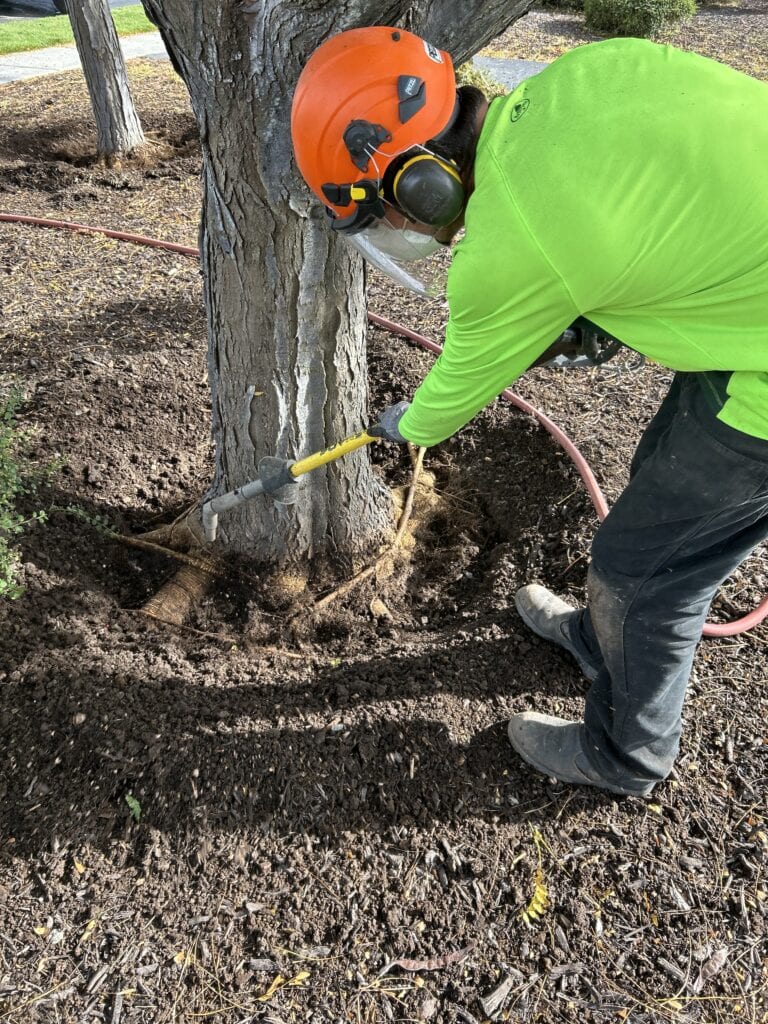
A bad water year doesn’t have to mean a hard spring season for your trees. Let’s walk your whole property, not just looking at the one or two trees that look rough, and create a winter plan that fits your site.
Call TreeMendus Arbor Care at 801-403-4496 to schedule a consultation.