It’s a pretty common thing to see during a consultation with a homeowner: your trees might look ok in June, but then by August they look scorched and start dropping leaves.
If the tree leaves look dry, most people think they just need more water, and while sometimes that could be true, at TreeMendus Arbor Care we look at drought stress and the health of a tree’s roots as the same problem viewed from two different angles. If you treat one without treating the other, you’re only solving half of the problem.
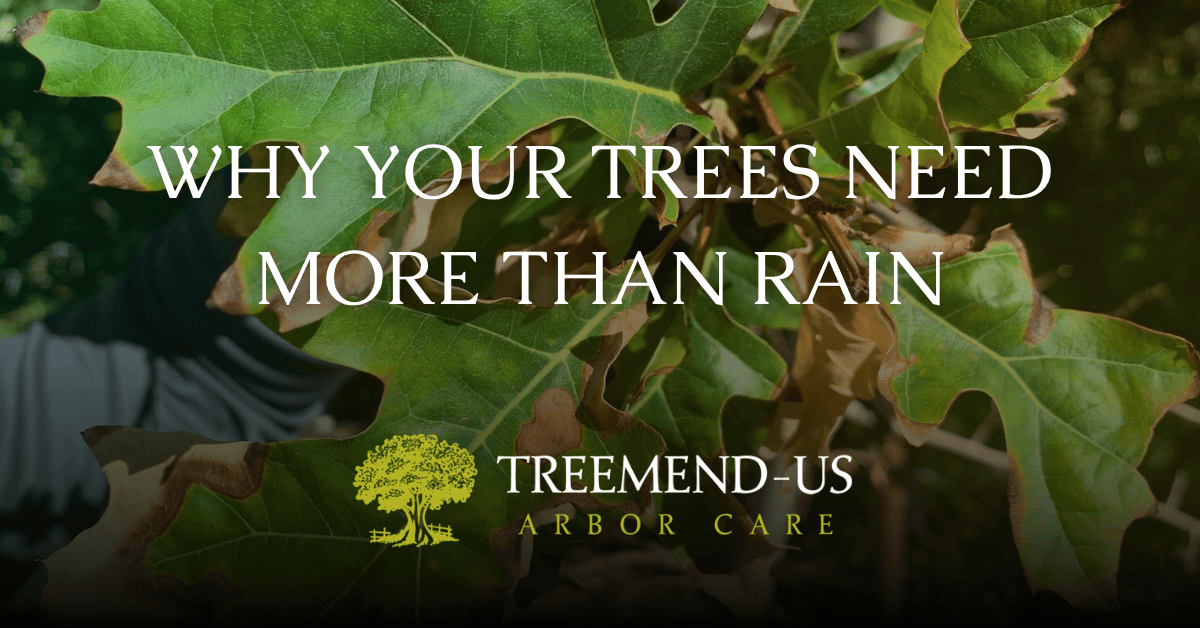
What does drought stress look like on a tree?
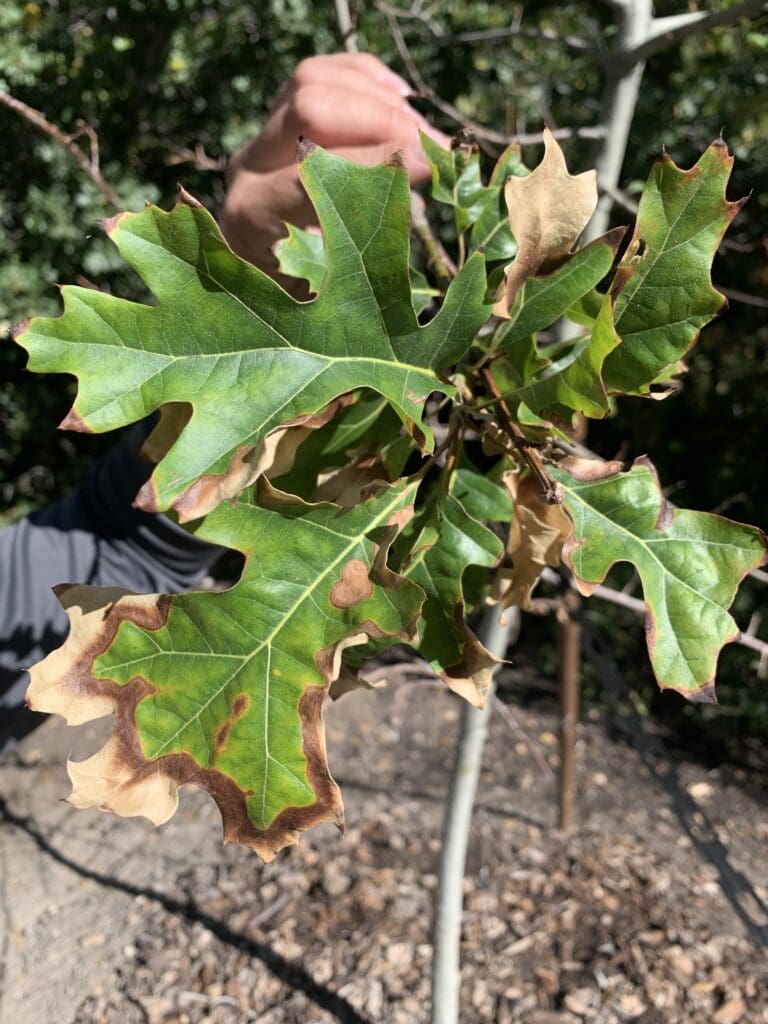
If your tree is stressed from Utah’s drought conditions, there are a few things you can look for. Scorched or curling leaves, a thinning canopy, early fall colors or even leaves falling before they’re supposed to. Those are some of the signs I get called out for.
The Utah State University Extension says that while Utah is naturally a dry state, trees that aren’t adapted to our drought conditions will become stressed without supplemental irrigation during the growing season. That means symptoms showing tree decline like wilting or folding leaves, yellowing and premature leaf drop.
Just like a human body if you try to treat symptoms based on an unknown cause, you could end up doing more damage than good.
Why symptoms don’t tell the whole story
When I look at stressed trees in northern Utah, I sometimes find that they’re not quite right for the site they’ve been planted in. I love what Salt Lake City’s Urban Forestry program says on their website: Selecting the right tree for the right place matters, because trees are lifetime investments. If a tree is fighting for its life each year, drought symptoms are an indication of a much deeper problem.
What’s the difference between deep-root watering and surface watering?
If your sprinkler system turns on and your trees just get watered from the sprinkler heads, that shallow watering actually trains the tree’s roots to keep next to the surface. And that’s where the roots are most exposed to evaporation.
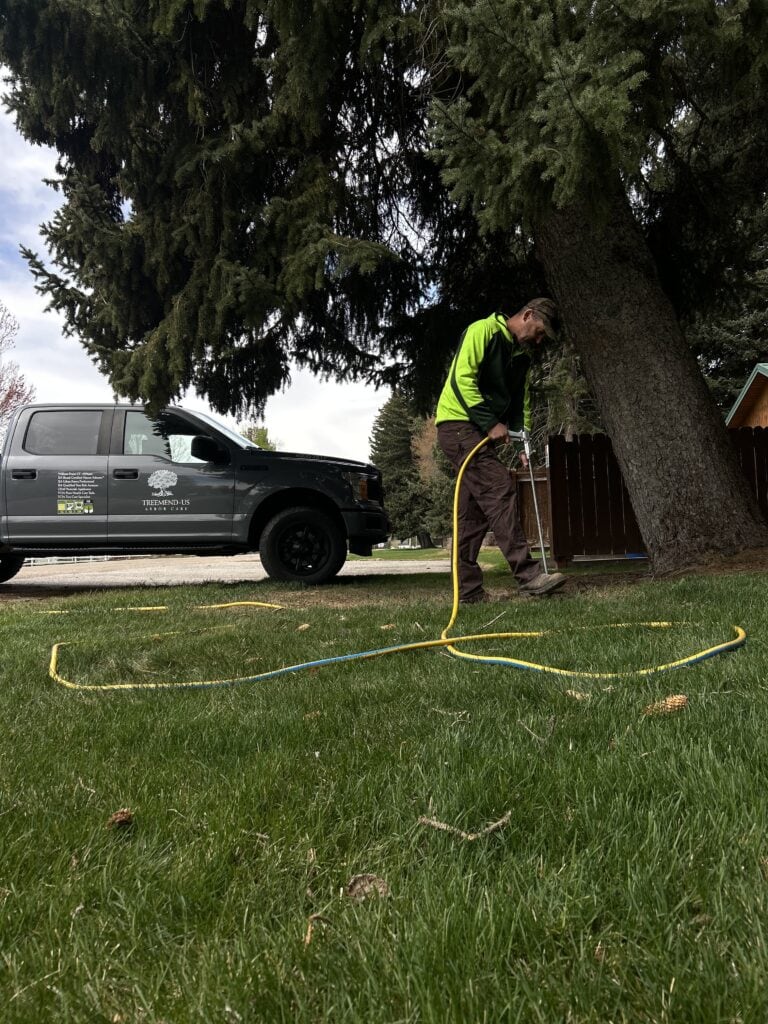
The USU Extension has great guidance on what to do instead. Deeper watering less often, and centered within the root zone. This will give you better results, and is exactly how we built our tree drought protection service around. We water the tree precisely where the roots will absorb it best, and time it to the specific soil and season, instead of based on a calendar.
Why does soil conditioning matter with watering?
What most homeowners don’t know is that you can water your trees perfectly and they can still struggle if the soil doesn’t let the water and nutrients through.
The typical Northern Utah soil is compacted and alkaline, which hinders root function even when the right amount of moisture is there. That’s where our Deep Root Fertilization and Soil Conditioning service helps. We’ll break up that compacted soil, restore oxygen to the root zone, and let those nutrients get into the tree where they can use them.
Soil and water work best when they’re a team. If you get your watering right, but don’t realize your soil is compacted and depleted of nutrients, you’re fighting an uphill battle. Let us help your trees build resilience against the upcoming winter. And if your trees are already showing signs of stress, give us a call at (801) 403-4496 and we’ll come out to see what’s actually going on below the soil.